The 60-second answer
Children now encounter information in more formats than ever: search results, social media clips, AI chatbots, edited images and convincing videos. Some of it is useful. Some of it is misleading. Some of it is entirely fabricated.
England’s revised Relationships, Sex and Health Education guidance came into effect in September 2026, with stronger teaching around emerging technology, including AI chatbots, deepfakes, misinformation and disinformation.
The wider direction of travel is clear. Pupils will need more than subject knowledge. They will also need to question where information comes from, recognise manipulation and use evidence responsibly.
For students preparing for GCSEs, A Levels and beyond, that is not an optional digital skill. It is part of becoming an independent learner.
What has changed in England?
The Department for Education has strengthened expectations around how schools help pupils navigate online risks and emerging technology.
New statutory guidance for schools includes teaching about artificial intelligence, deepfakes and the ways online content can distort reality. In September, the Education Secretary also announced further support for schools to address harmful online influences, including resources, teacher training and parent support.
This does not mean every lesson will suddenly become about technology. It means schools are being asked to help pupils think more critically about the content they encounter, share and rely on.
The government has also said that media literacy, critical thinking and the ability to identify misinformation will be strengthened through future curriculum reform. A new curriculum is expected to follow from 2027, with first teaching planned from September 2028.
Why this is an academic issue, not just a safeguarding issue
A convincing video is not automatically evidence. A confident answer from an AI chatbot is not automatically correct. A widely shared post is not automatically trustworthy.
These are questions students already face when researching an essay, revising a topic or forming an opinion about current affairs.
Strong academic work depends on being able to:
- identify the original source of a claim
- distinguish evidence from opinion
- compare information across credible sources
- recognise missing context or misleading framing
- explain why a source is reliable, limited or biased
These are skills that support English, History, Science, Geography, Citizenship and Computing. They also matter in everyday revision, where students may be tempted to accept the first answer they find online.
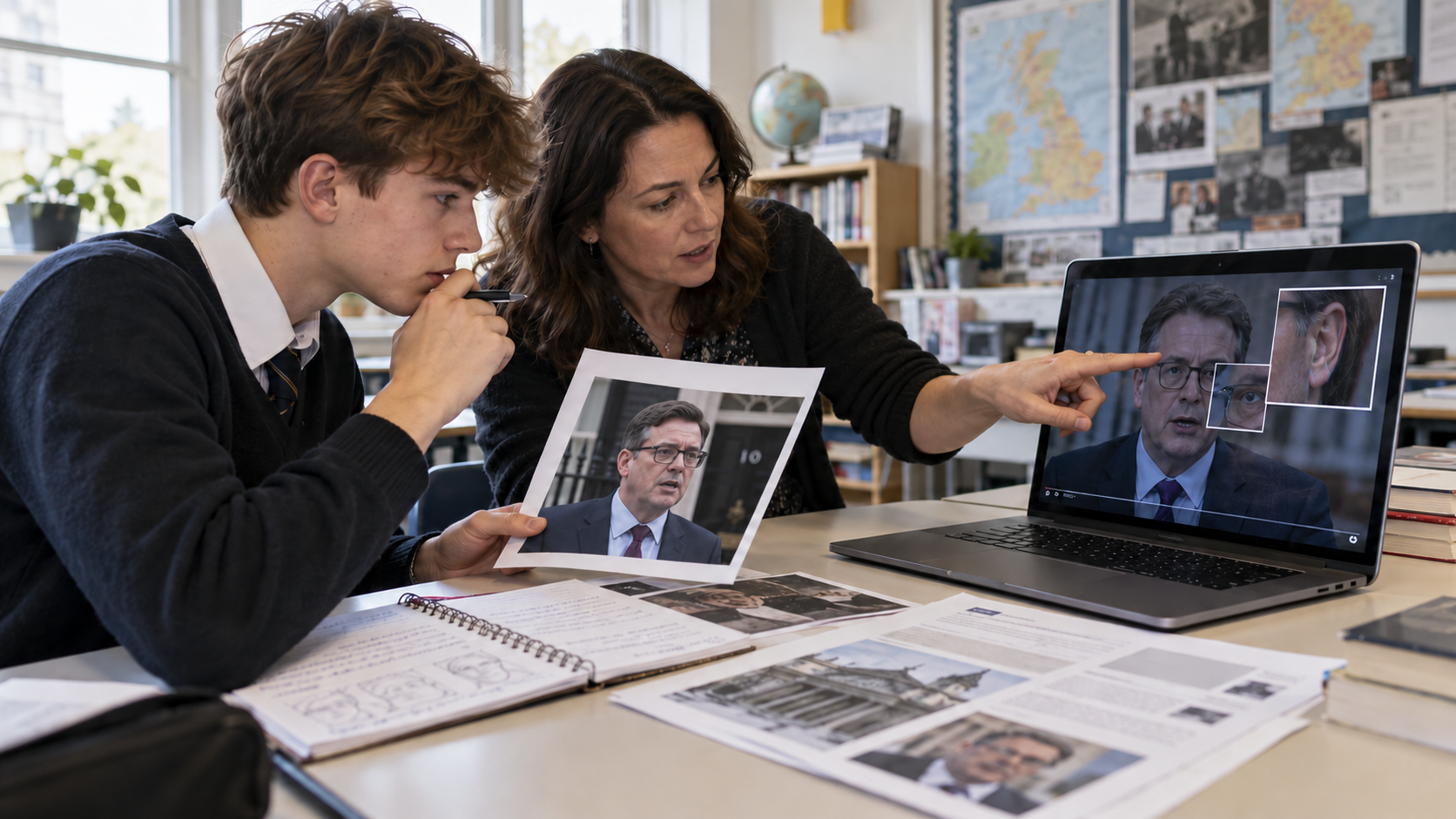
A deepfake makes this challenge more visible. It can look and sound real while presenting something that never happened. The response should not be panic. It should be better habits of questioning, checking and thinking.
What should students learn to do?
The aim is not for young people to become suspicious of everything online. It is for them to become more thoughtful users of information.
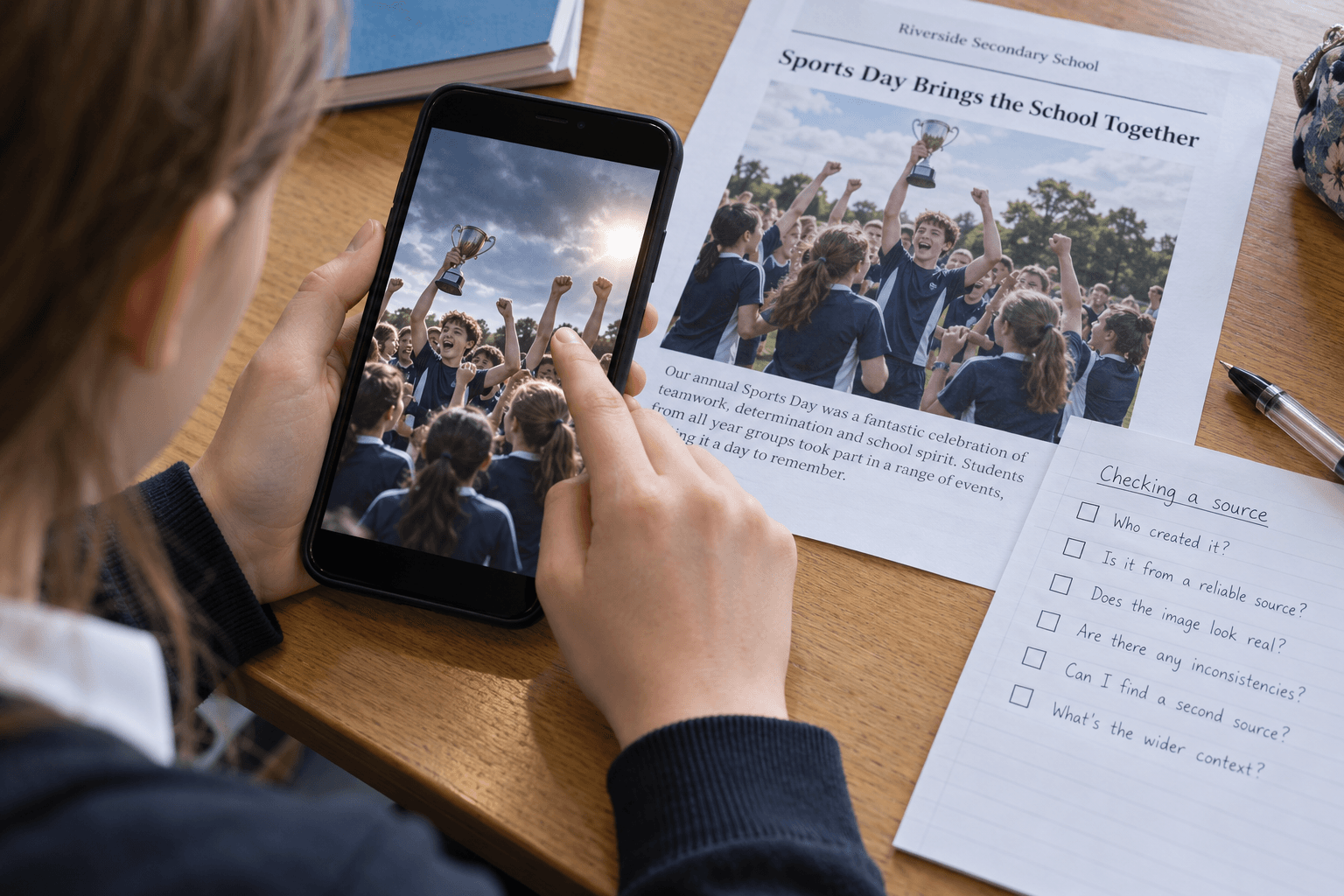
A useful starting point is to ask four questions:
1. Who made this?
Students should look beyond the post itself. Is there a named author, organisation or original source? Is that source qualified to make the claim?
2. What is the evidence?
A credible claim should be supported by evidence that can be checked. This may include official data, research, direct reporting or a reliable primary source.
3. Can it be confirmed elsewhere?
If a claim matters, it is worth checking more than one reliable source. A story repeated across social media is not the same as independent confirmation.
4. What might be missing?
Images, clips and statistics can all be presented without context. Students should learn to ask what happened before, after or outside the frame.
These habits are valuable long before formal coursework begins. They help children develop the independence required for GCSE, A Level and university-level study.
Where does AI fit into this?
AI can be useful for generating practice questions, explaining unfamiliar ideas or helping students review a piece of writing. But it should not replace the thinking that learning requires.
A student who asks an AI tool to complete an essay may receive fluent text, but they have not practised planning an argument, selecting evidence or expressing an idea in their own words. Those are the skills the assessment is intended to measure.
For assessed work, students must follow their school, exam board and Joint Council for Qualifications guidance. Submitting AI-generated work as their own can amount to malpractice. Where AI use is permitted, it must be acknowledged appropriately.
The most constructive approach is to help students use AI as a support tool, not as a substitute for subject knowledge, effort or originality.
How parents can support critical thinking at home
Parents do not need to become fact-checkers or technology specialists. Small, regular conversations can make a real difference.
When a child shares something surprising they have seen online, try asking:
- Where did this come from?
- What makes it believable?
- Could there be another explanation?
- Have you checked it anywhere else?
- What would you need to see before treating it as true?
The goal is not to catch children out. It is to make curiosity and verification feel normal.
It also helps to keep the distinction clear between help and replacement. A tool can support revision. It should not do the learning for them.
Halo’s perspective
The future will reward students who can think independently, communicate clearly and evaluate information carefully.
Technology will continue to change how children access knowledge. The foundations of strong learning will not change: subject understanding, curiosity, judgement and the confidence to ask better questions.
At Halo Tuition Academy, we help students build the academic habits that matter beyond a single lesson or exam, including clear thinking, secure subject knowledge and independent study skills.
Looking for personalised support that helps your child become a more confident, independent learner? Speak to the Halo Tuition Academy team.
Sources
- Department for Education, Education Secretary unveils plan for schools to tackle misogynyhttps://www.gov.uk/government/news/education-secretary-unveils-plan-for-schools-to-tackle-misogyny
- Department for Education, Relationships education, relationships and sex education and health educationhttps://www.gov.uk/government/publications/relationships-education-relationships-and-sex-education-rse-and-health-education
- UK Government, Growing up in the online world: government responsehttps://www.gov.uk/government/consultations/growing-up-in-the-online-world-a-national-consultation/outcome/growing-up-in-the-online-world-government-response-july-2026
- Ofqual, AI and coursework integrityhttps://www.gov.uk/government/publications/ai-in-coursework-resources-for-schools/senior-leadership-team-briefing-pack-ai-and-coursework-integrity-accessible
Editorial note: This article reflects official guidance available as of 5 October 2026. Curriculum implementation details may develop as further materials are published.